
The words you pick shape how people read your intent. A vague verb makes a clear idea feel soft, while a precise one makes it land. “Foster” is a good example, because it sounds warm but often says very little.
Writers lean on it in emails, cover letters, and reports without asking what they actually mean. Swapping it for a sharper word saves your reader time and adds credibility. This guide gives you 30 synonyms for foster, sorted by context, with real examples you can borrow.
Quick Answer: Another Word for Foster
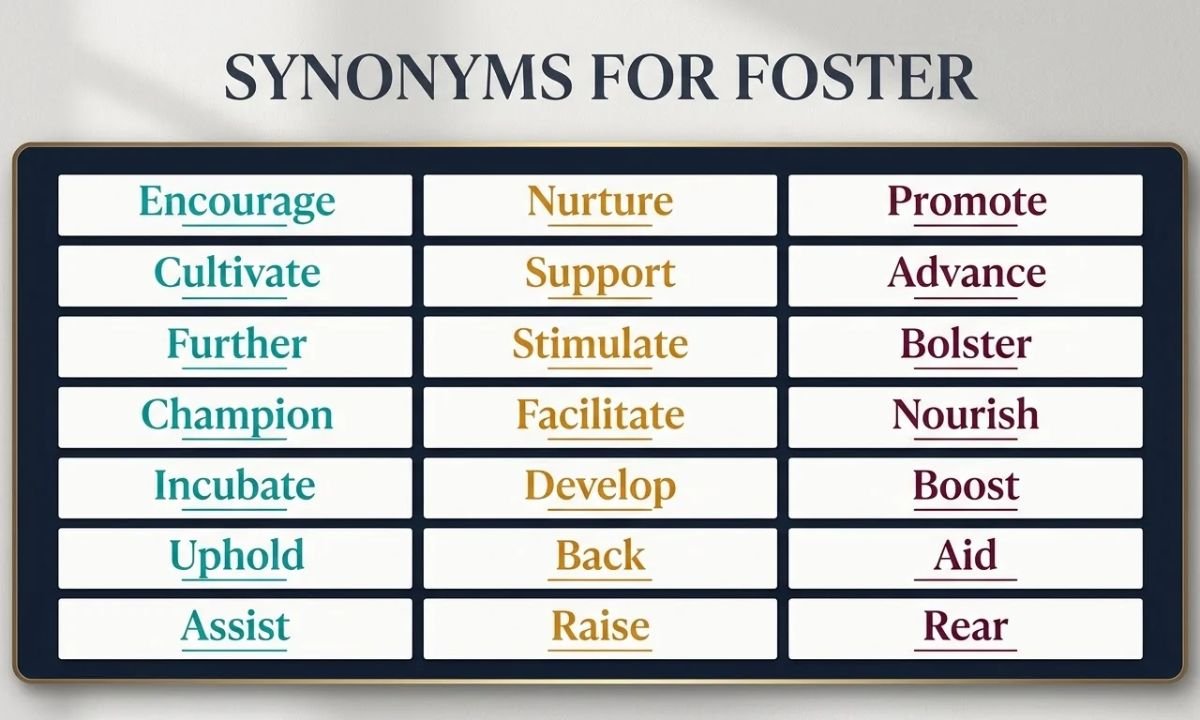
The best synonyms for foster are encourage, nurture, promote, cultivate, and raise. Which one fits depends on what you are fostering.
- An idea, habit, or skill: encourage, cultivate, nurture
- A project or cause: promote, advance, champion
- A child or animal: raise, rear, look after
- As an adjective (foster home): surrogate, temporary, caretaker
Foster Synonyms at a Glance
Use this table to find other words for foster in writing when you are short on time.
| Meaning | Best Alternatives | Tone |
| Help something grow | nurture, cultivate, develop | Warm, patient |
| Push something forward | promote, advance, further | Active, professional |
| Give backing | support, back, bolster, champion | Firm, loyal |
| Spark activity | stimulate, spur, inspire | Energetic |
| Make possible | enable, facilitate | Neutral, practical |
| Raise a child | raise, rear, bring up | Everyday, formal |
| Provide shelter | house, shelter, look after | Protective |
Why “Foster” Is Overused in AI-Style Writing
Phrases like “foster a sense of community” and “foster innovation” now read like autopilot. Readers have seen them thousands of times, and many assume a machine wrote them.
The fix is simple. Name the action. Instead of “foster collaboration,” write “set up weekly design reviews.” Instead of “foster growth,” write “coach two junior analysts.” A concrete verb with a concrete object always sounds more human than “foster” plus an abstract noun.
Synonyms for Foster on a Resume
Recruiters often skim past “fostered” because it sounds passive. These synonyms for fostered work better, especially when paired with a number.
- Weak: Fostered donor relationships.
- Stronger: Cultivated a portfolio of 70 major donors.
- Weak: Fostered team culture.
- Stronger: Built a mentoring program that cut new-hire turnover by 20%.
Good action verbs for a professional foster synonym include cultivate, build, champion, strengthen, and facilitate. Pick the one that matches what you actually did, then add the result.
Synonyms for Foster Care and Parenting
Most articles ignore the adjective form. In “foster care,” “foster parent,” and “foster home,” the word means temporary family care, so words like promote or cultivate make no sense.
- Foster parent: caretaker, guardian, temporary parent
- Foster home: temporary home, caregiving home
- Foster care: temporary care, guardianship, substitute care
Be careful with “adoptive.” It overlaps in family settings, but adoption is permanent and foster care usually is not. Never treat them as interchangeable.
Synonym Traps: Words Similar to Foster With a Negative Tone
Some words found in thesauri look like safe swaps but carry a harsher meaning. Check these before you use them.
- Foment: Means to stir up trouble, as in fomenting unrest. Avoid it for anything positive.
- Abet: Usually describes helping with wrongdoing.
- Breed: Can sound clinical or suggest something unwanted, such as breeding resentment.
- Patronize: Often reads as condescending today.
- Indoctrinate: Implies pressure and one-sided teaching.
A cover letter that says “I abetted team growth” will raise eyebrows. When in doubt, choose a plain positive verb from the list below.
Encourage
Context & Usage: Encourage means to give someone or something the confidence or push to continue. It fits everyday situations where you want to show belief in a person, habit, or idea. It is one of the warmest stronger words for foster because it feels personal and sincere.
Examples:
- Her manager encouraged open feedback during every meeting.
- Small wins encourage people to keep going.
Promote
Context & Usage: Promote means to actively push something forward so more people notice or adopt it. It works well in professional, educational, and public settings. It signals purpose and effort, which makes it a common choice for causes and programs.
Examples:
- The school promotes reading through weekly book swaps.
- He promoted a safer workflow across the whole department.
Cultivate
Context & Usage: Cultivate means to develop a skill, relationship, or quality with steady effort over time. It suits situations where growth is slow and deliberate. It carries a sense of patience, which readers tend to respect.
Examples:
- She cultivated strong ties with local suppliers.
- Good teachers cultivate curiosity, not just correct answers.
Nurture
Context & Usage: Nurture means to care for something closely so it can thrive. It fits mentoring, creative work, and personal relationships. It adds emotional warmth and suggests that you stay involved.
Examples:
- He nurtured the young designers on his team.
- You can nurture a friendship with a simple weekly call.
Support
Context & Usage: Support means to back an effort, person, or environment with help or approval. It is simple and fits almost any everyday situation. Its plain tone makes it a safe choice when you want to sound reliable and not dramatic.
Examples:
- Our office supports flexible schedules for parents.
- The grant will support new research in the lab.
Advance
Context & Usage: Advance means to move a project, goal, or cause forward. It suits work and policy settings where progress is the point. It gives your sentence momentum without sounding forced.
Examples:
- The committee voted to advance the new safety plan.
- Her research advanced our understanding of sleep.
Further
Context & Usage: Further, used as a verb, means to help something progress toward a goal. It fits formal writing, such as reports, speeches, and applications. It sounds measured and serious, which suits careers and mission statements.
Examples:
- He joined the board to further the group’s mission.
- Extra training will further your career in data analysis.
Stimulate
Context & Usage: Stimulate means to spark activity, interest, or growth. It works when you want to show that something triggers a response. It adds energy, which makes it useful for economics, education, and creative topics.
Examples:
- Open questions stimulate better class discussion.
- Lower prices stimulated demand across the region.
Champion
Context & Usage: Champion means to defend and publicly back a cause, idea, or person. It fits leadership and advocacy, where you want to show real commitment. It is one of the strongest foster synonyms because it implies you will speak up and take a stand.
Examples:
- She championed paid parental leave for years.
- The director championed the young writer’s first book.
Bolster
Context & Usage: Bolster means to strengthen something that already exists. It suits situations where support is needed to make an effort more solid. It gives readers a sense of reinforcement and stability.
Examples:
- New hires will bolster the support team this spring.
- A clear plan bolstered the team’s confidence.
Boost
Context & Usage: Boost means to raise or improve something quickly. It fits casual and business writing where a short, lively verb works well. It adds a upbeat tone, though it is less formal than most words on this list.
Examples:
- A strong first week boosted morale.
- Weekly check-ins boost trust between managers and staff.
Make time for this: Synonyms for Navigate: 35 Clear Alternatives by Context
Strengthen
Context & Usage: Strengthen means to make something more solid, secure, or effective. It works for relationships, skills, systems, and teams. It gives a clear picture of improvement without exaggeration, which makes it a dependable choice on a resume.
Examples:
- Joint workshops strengthened the bond between both offices.
- He strengthened the onboarding process with clear checklists.
Build
Context & Usage: Build means to create something step by step, such as trust, a team, or a program. It fits both everyday talk and professional writing. It sounds hands-on and honest, which is why recruiters like it.
Examples:
- She built a loyal customer base from scratch.
- Honest feedback helps build trust.
Develop
Context & Usage: Develop means to grow a skill, idea, or project to a fuller stage. It fits learning, product work, and career growth. It suggests steady progress, so it works well when you want to show effort over time.
Examples:
- The course helps students develop strong writing habits.
- He developed a training plan for new volunteers.
Facilitate
Context & Usage: Facilitate means to make a process easier or possible without directing it. It fits meetings, workshops, and team projects. It signals that you enable others to do their best work, which many employers value.
Examples:
- She facilitated weekly planning sessions for the product team.
- A shared calendar facilitates smoother handoffs.
Incubate
Context & Usage: Incubate means to protect and develop an early-stage idea or project until it can stand alone. It fits startups, research, and creative work. It paints a picture of careful early support, which adds a thoughtful tone.
Examples:
- The university incubates student startups for their first year.
- He incubated the idea in a small side project.
Spur
Context & Usage: Spur means to push something to move faster or start sooner. It suits writing about change, results, and motivation. It is short and punchy, which gives your sentence energy.
Examples:
- The new deadline spurred the team into action.
- Rising costs spurred a search for cheaper suppliers.
Back
Context & Usage: Back means to support a person, plan, or cause with approval or resources. It fits casual talk, business, and politics. It sounds direct and loyal, which readers often find reassuring.
Examples:
- Several local firms backed the youth program.
- I will back you if you pitch the idea on Monday.
Inspire
Context & Usage: Inspire means to stir someone to feel, think, or act. It fits leadership, teaching, and creative work. It has strong emotional value, so use it when real motivation is the point and not just general help.
Examples:
- Her story inspired a whole generation of engineers.
- A good mentor inspires you to aim higher.
Enable
Context & Usage: Enable means to give someone the means or opportunity to do something. It works in technical, workplace, and community writing. It sounds practical and neutral, which keeps your tone calm and clear.
Examples:
- The new tool enables staff to share files faster.
- Scholarships enable more students to study abroad.
Raise
Context & Usage: Raise means to care for a child or animal until it is grown. It is the most common everyday substitute for foster in family settings. It sounds natural and warm, with no extra formality.
Examples:
- They raised three children in a small coastal town.
- She raised the puppy from eight weeks old.
Rear
Context & Usage: Rear means to bring up a child or animal, usually in a slightly formal tone. It fits books, essays, and farming contexts. It sounds more literary than “raise,” so use it when you want a measured, traditional feel.
Examples:
- He was reared by his grandparents in the countryside.
- The farm rears sheep for wool.
Don’t miss this: Synonyms for Lead: Best Words by Context and Tone
Bring Up
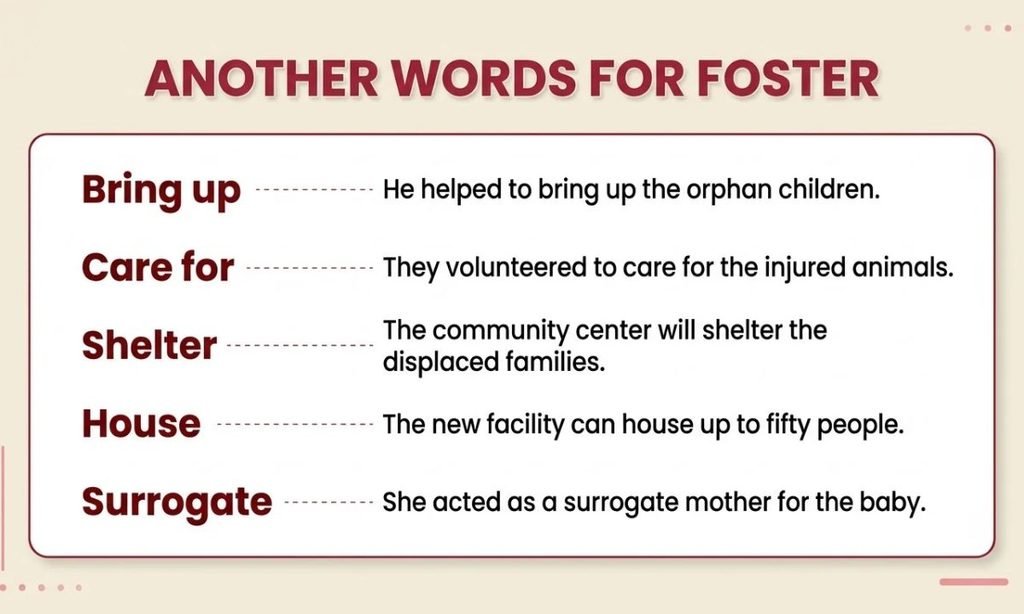
Context & Usage: Bring up means to raise a child, especially in a particular way or setting. It is a natural, conversational phrase for parenting and family stories. It adds a friendly tone that suits personal writing.
Examples:
- She was brought up to value honesty.
- They brought up their kids on a quiet farm.
Care For
Context & Usage: Care for means to look after someone’s daily needs and wellbeing. It fits nursing, parenting, and animal care. It highlights kindness and responsibility, which gives it a gentle emotional value.
Examples:
- Volunteers care for rescued cats until they find homes.
- He cared for his younger brother after school.
Look After
Context & Usage: Look after means to watch over a person or animal and meet their needs. It is common in British English and everyday speech. It sounds relaxed and trustworthy, which suits short-term care.
Examples:
- Can you look after my dog this weekend?
- She looked after her neighbor’s children every Friday.
Shelter
Context & Usage: Shelter means to give someone or something a safe place to stay. It fits animals, families in need, and emergency situations. It carries a strong sense of protection, which adds emotional weight.
Examples:
- The family sheltered two stray dogs during the storm.
- Local churches shelter people in the winter months.
House
Context & Usage: House means to provide a home or living space for someone or something. It works when the focus is on the physical place, not the emotional care. It is plain and factual, which makes it a clear choice in reports and news writing.
Examples:
- The program houses children while their cases are reviewed.
- Our spare room houses visiting students each summer.
Surrogate
Context & Usage: Surrogate, as an adjective, describes someone who takes the place of another, as in a surrogate parent. It fits family and caregiving contexts where a person fills a missing role. It carries an emotional sense of stepping in with care.
Examples:
- Her aunt became a surrogate mother during those years.
- The coach acted as a surrogate father to the team.
Temporary
Context & Usage: Temporary describes care or housing that lasts for a limited time. It fits the adjective sense of foster, as in temporary home or temporary care. It is neutral and accurate, which helps you avoid confusion with permanent arrangements.
Examples:
- The children moved into temporary care while their parents recovered.
- We offered a temporary home to a rescue cat.
Caretaker
Context & Usage: Caretaker describes someone who looks after a person, animal, or place. As an adjective or noun, it fits guardianship and short-term care roles. It sounds steady and responsible, which suits official and personal writing.
Examples:
- She served as the caretaker for her two nephews.
- A caretaker guardian was appointed until the court decided.
Antonyms for Foster
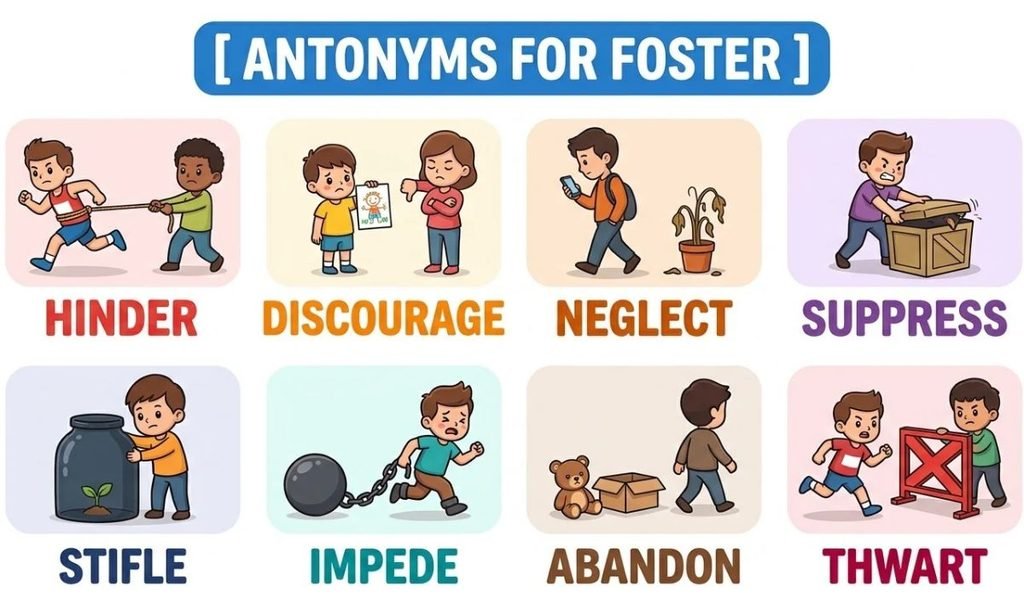
The opposite of foster is to block, weaken, or neglect. Useful antonyms for foster include:
- Hinder
- Discourage
- Suppress
- Neglect
- Stifle
- Obstruct
For the parenting sense, abandon and neglect are the closest opposites.
Foster vs Nurture vs Cultivate vs Encourage
These four words overlap, but each one points to a different kind of help.
| Word | Core Idea | Best Used When |
| Encourage | Give confidence | You want to motivate a person or habit |
| Nurture | Give care | Something fragile needs close attention |
| Cultivate | Grow over time | A skill or relationship develops slowly |
| Foster | Support the conditions | You set up the environment and step back |
If you are unsure, pick the word that matches the action you took, not the feeling you want to create.
Frequently Asked Questions
What is the closest synonym to foster?
Encourage is the closest all-purpose synonym, and nurture is the best fit when careful, ongoing support is involved.
Can I replace foster with promote in academic writing?
Yes, promote works well when you mean actively advancing an idea or practice, but use cultivate or develop for slow growth.
What is a more formal word for foster?
Further, advance, and cultivate are strong formal choices, and rear is the formal option for raising a child.
What is a better word for fostered on a resume?
Use action verbs such as built, cultivated, strengthened, or championed, and back them with a number.
Is foster used differently in British and American English?
British writers often use look after, bring up, and harbour for similar meanings, while American writers lean toward raise and care for.
Conclusion
Choosing the right word for foster is a small habit with a big payoff, because each alternative on this list carries its own tone, intent, and level of effort. When you match the verb to the real action, your writing becomes clearer, your resume sounds more credible, and your emails read like they came from a person who knows what they mean.
Keep the traps in mind, watch for words like foment and abet, and treat the adjective sense of foster as its own case. With practice, you will reach for the precise word first, and your communication will feel more confident every time.

Hi, my name is Kalvin. I love to read and learn new words every day. On this site, I share easy synonyms and simple grammar tips. Let us learn and write better together!


One thought on “Synonyms for Foster: 30 Better Words by Context”