
The words you choose shape how people read your message. “Big fan” works in a pinch, but it says very little about how you feel or what kind of fan you are. A sports supporter, a book lover, and a loyal customer each deserve a different label.
Precise vocabulary makes your writing sound sharper and your praise sound real. This guide gives you big fan synonyms for casual chats, cover letters, reviews, and social posts. Use it to find another word for big fan that fits your tone, your audience, and your point.
Quick Picks: Top Big Fan Synonyms
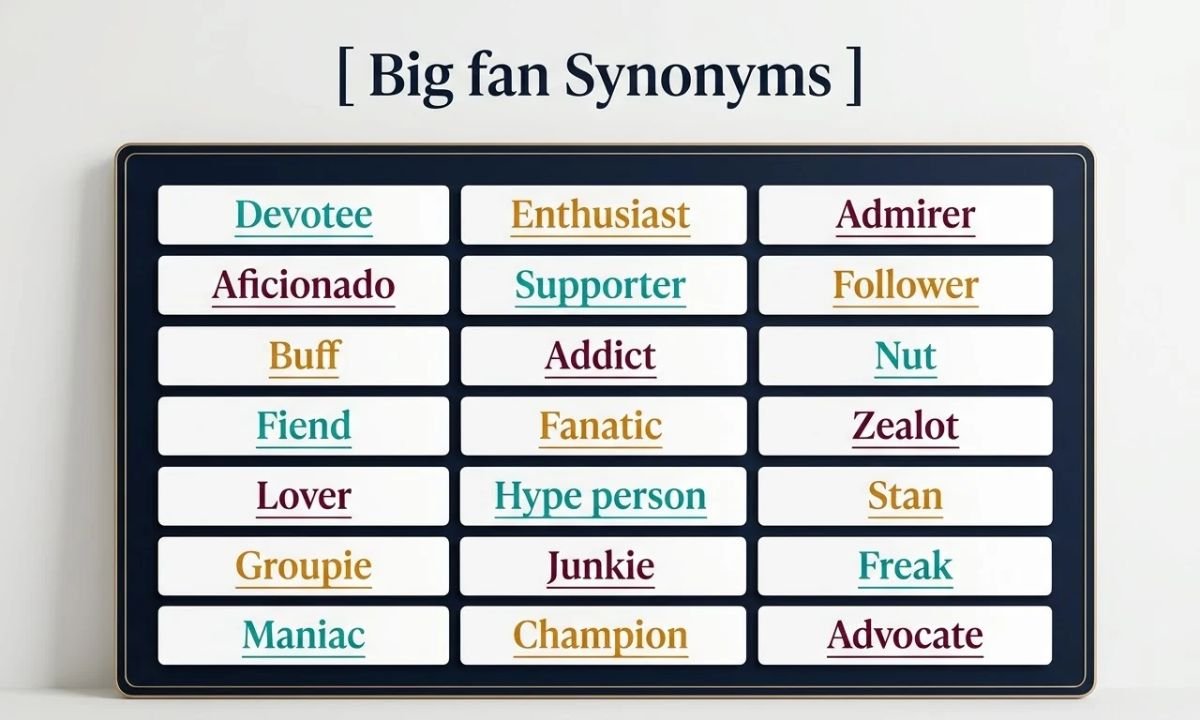
If you need an answer fast, start here. For warm and safe, use admirer, enthusiast, or supporter. For serious passion, use devotee, aficionado, or diehard supporter. For online and casual talk, use superfan or stan. For professional writing, use advocate, proponent, or patron. Most synonyms for fan carry a slightly different shade of meaning, so the sections below explain each one.
Casual & Everyday Big Fan Synonyms
In conversation, you want words that sound natural and relaxed. Terms like huge fan, biggest fan, buff, and superfan fit texts, social posts, and chats with friends. These huge fan synonyms keep the tone friendly without sounding stiff. Avoid anything too formal here, since a word like “aficionado” can sound showy over coffee.
Enthusiastic & Passionate Alternatives
Some people go well beyond casual interest. For them, devotee, ardent fan, fervent admirer, and number one fan show real depth. These great fan synonyms signal commitment, time spent, and genuine feeling. They work best when the passion is real and you can back it up.
Polished Words for Work & Formal Writing
In a cover letter, a bio, or a business email, “big fan” can sound too light. Swap in admirer, advocate, proponent, patron, or connoisseur. Each one sounds measured and professional while still showing that you care. A single precise word often does more than an extra adjective.
Pop Culture & Slang Terms to Use Carefully
Words like stan, superfan, and groupie come from fan culture and carry strong flavor. They can be fun, but they can also read as intense, joking, or even insulting. Know your audience before you use them. Slang tends to work in captions and fan communities and falls flat in formal writing.
Choosing the Right Word by Context
The best choice depends on three things: your audience, your tone, and how strong the feeling is. Think of a scale from mild to extreme. Mild terms include follower, regular, and supporter. Mid-range terms include enthusiast, admirer, and buff. Strong terms include devotee, diehard, and fanatic. Loaded terms such as zealot and groupie can carry negative meaning, so use them with care.
One more note on spelling and meaning: “fan” also means a device that moves air. Synonyms for fan in that sense, like blower or ventilator, have nothing to do with admiration. If you search for another word for big fan, make sure you are looking at the admiration meaning.
Admirer
Context & Usage: An admirer respects and appreciates a person or their work, often from a distance. It fits professional and personal writing where you want a warm, respectful tone. It tells the reader you value skill or character without sounding over the top.
- I have been an admirer of her reporting for years.
- He is a longtime admirer of the architect’s work.
Enthusiast
Context & Usage: An enthusiast has an active, hands-on interest in a hobby, product, or topic. It works well for cars, music, gadgets, cooking, and similar interests. It suggests energy and curiosity more than simple approval.
- She is a running enthusiast who joins every local race.
- The forum is full of coffee enthusiasts swapping brewing tips.
Supporter
Context & Usage: A supporter backs a team, cause, or person, often over a long period. It fits sports, charities, and community projects. It carries loyalty and trust without the heat of stronger words.
- He has been a loyal supporter of the club since childhood.
- The charity thanked every supporter who donated this year.
Devotee
Context & Usage: A devotee shows deep, steady commitment to a person, art form, or practice. Use it when interest has become a regular part of someone’s life. It adds weight and sincerity to your description.
- She is a devotee of classic jazz and owns hundreds of records.
- Yoga devotees filled the studio before sunrise.
Aficionado
Context & Usage: An aficionado combines passion with real knowledge. Use it for food, wine, film, or any field where expertise matters. It signals taste and experience, so save it for people who know their subject.
- He is a film aficionado who can name every director of the decade.
- The shop attracts cheese aficionados from across the city.
Buff
Context & Usage: A buff is a casual, friendly word for someone who knows a lot about a topic. It suits relaxed writing and everyday conversation. It gives a light, approachable feel without sounding stiff.
- My uncle is a history buff and loves old battlefields.
- She is a true movie buff with a huge DVD shelf.
Follower
Context & Usage: A follower keeps up with a person, brand, or movement, often online. It fits social media and general interest, and it carries little emotional heat. Use it when you want a neutral, factual label.
- He has been a follower of her newsletter since its first issue.
- The brand thanked its followers for the support.
Stan
Context & Usage: A stan is an extremely devoted fan, a term that began in internet and music culture. It fits casual, playful talk among peers. It can sound intense or jokey, so skip it in formal settings.
- She is a total stan for that band and owns every album.
- I stan any show with a good mystery.
Superfan
Context & Usage: A superfan is a fan whose passion goes well past the average level. It is playful, clear, and widely understood. It works in marketing, social posts, and friendly conversation.
- He is a superfan who travels to every home game.
- The author invited superfans to a private reading.
Read it slowly:Synonyms for Specific: 35 Better Words With Examples
Biggest Fan
Context & Usage: “Biggest fan” sets someone apart as the most devoted of all. It is warm and often used in personal notes and encouragement. Among biggest fan synonyms, it feels the most affectionate and human.
- My grandmother is my biggest fan and attends every show.
- You have a biggest fan in me, so keep writing.
Huge Fan
Context & Usage: “Huge fan” is an easy, upbeat way to show strong interest. It suits chats, reviews, and social posts. It signals clear enthusiasm without any formal weight.
- I am a huge fan of her latest novel.
- He is a huge fan of street food in any city.
Ardent Fan
Context & Usage: An ardent fan shows burning, sincere passion for a subject. It leans literary and works well in features, profiles, and thoughtful essays. It adds emotional depth without sounding silly.
- She is an ardent fan of the local theater company.
- The team’s ardent fans stayed until the final whistle.
Avid Fan
Context & Usage: An avid fan follows something eagerly and consistently. It sounds polished yet friendly, which makes it a safe choice for most writing. It tells readers the interest is active, not passing.
- He is an avid fan of mystery podcasts.
- The magazine surveyed its avid fans about new features.
Number One Fan
Context & Usage: “Number one fan” gives a person top rank among all supporters. It works in personal notes, gifts, and affectionate teasing. It adds a playful, loyal tone to a message.
- My dad is my number one fan at every recital.
- She called the baker her number one fan after the first batch.
Diehard Supporter
Context & Usage: A diehard supporter stays loyal through losses, delays, and bad seasons. It fits sports and causes where faith is tested. It highlights loyalty and grit more than simple enjoyment.
- He is a diehard supporter who never misses a match.
- The party’s diehard supporters packed the hall again.
Great Admirer
Context & Usage: A great admirer holds someone in high regard and says so openly. It sounds formal and graceful, which suits letters, speeches, and tributes. Among great fan synonyms, it carries the most dignity.
- She is a great admirer of the poet’s early work.
- He wrote as a great admirer of the senator’s patience.
Fervent Admirer
Context & Usage: A fervent admirer feels strong, warm devotion that shows in words and actions. It fits profiles, tributes, and heartfelt writing. It conveys passion with a polished tone.
- He remains a fervent admirer of the old master painters.
- A fervent admirer sent her a handwritten letter.
Proponent
Context & Usage: A proponent argues in favor of an idea, method, or policy. It fits business, politics, and academic writing. It suggests informed support rather than emotional fandom.
- She is a proponent of four-day work weeks.
- The proponents of the plan presented their data.
Advocate
Context & Usage: An advocate actively speaks up for a cause, person, or product. It works well in professional bios and mission statements. It shows both belief and action, which makes it a strong workplace choice.
- He is an advocate for open-source tools.
- The nurse became a patient advocate in her community.
Patron
Context & Usage: A patron supports an artist, business, or institution, often with money or regular visits. It fits arts, dining, and local shops. It carries respect and a sense of lasting relationship.
- She is a patron of the city’s small theaters.
- The bakery greets each patron by name.
Connoisseur
Context & Usage: A connoisseur has refined taste and deep knowledge in a specific field. It suits food, art, wine, and design. It signals discernment, so use it when judgment matters more than excitement.
- He is a tea connoisseur with a shelf of rare leaves.
- Art connoisseurs lined up for the preview.
Zealot
Context & Usage: A zealot pursues a cause with extreme and often uncritical passion. It usually carries a negative tone, so use it with care. It fits only when you want to point out excess.
- He became a zealot about his diet and lectured every guest.
- The forum was overrun by zealots shouting down any critic.
Let this move you: Hubby Synonyms: 32 Better Words for Your Husband
Groupie
Context & Usage: A groupie follows a famous person or band closely, often to an extreme degree. The word can sound dismissive, so avoid it in professional or respectful writing. It fits only in light or ironic contexts.
- She joked that she was a groupie for the local chef.
- The band’s early groupies still attend every show.
Loyalist
Context & Usage: A loyalist stays faithful to a brand, team, or leader over time. It fits business, sports, and politics. It shows steady trust more than loud excitement.
- He is a brand loyalist who has bought the same boots for years.
- Longtime loyalists welcomed the club’s new manager.
Booster
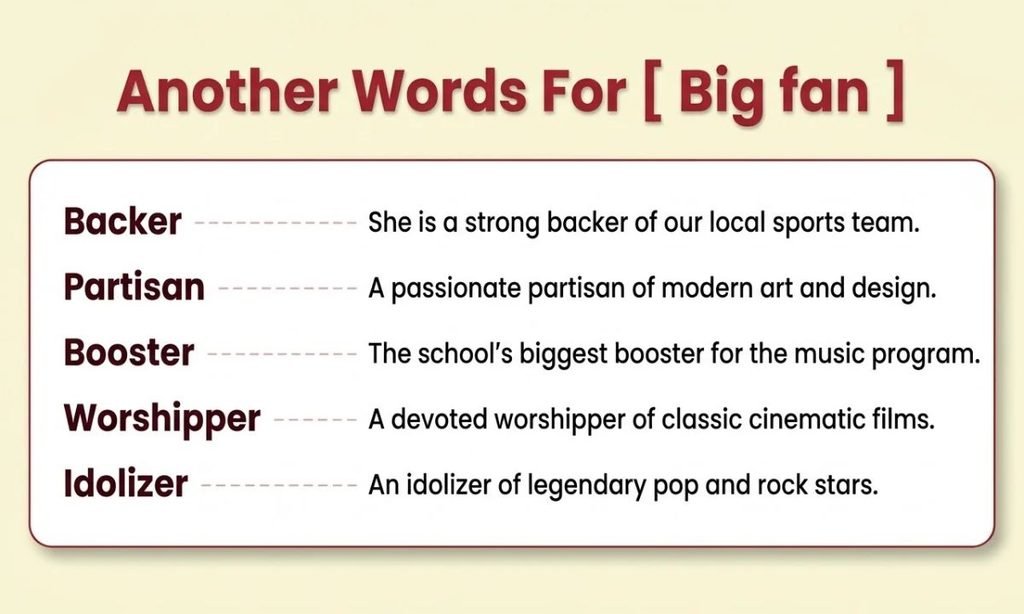
Context & Usage: A booster promotes and supports a team, school, or community. It sounds upbeat and civic-minded. It adds a sense of action, since boosters usually help raise energy or funds.
- She is a booster for the high school band.
- Local boosters paid for the new scoreboard.
Champion
Context & Usage: A champion defends and promotes a person or idea with energy. It works well in work settings and mission-driven writing. It suggests influence, not just personal interest.
- He is a champion of plain language in the office.
- The mentor became her greatest champion.
Fanatic
Context & Usage: A fanatic shows intense, sometimes extreme devotion. It can be playful in sports and food talk, but it can also sound negative. Check your audience before using it.
- He is a soccer fanatic who plans trips around matches.
- She is a fitness fanatic and trains six days a week.
Die-Hard
Context & Usage: Die-hard describes a person who never gives up their loyalty or interest. It works as a noun or an adjective and sounds blunt and strong. It fits sports, music, and long-running loyalty.
- He is a die-hard who still wears the team’s old jersey.
- The die-hard crowd stayed through the rain.
Cheerleader
Context & Usage: A cheerleader openly encourages a person or project. It fits teams, workplaces, and friendships. It carries a positive, supportive tone and focuses on motivation more than expertise.
- She is his biggest cheerleader as he finishes his degree.
- Every startup needs a cheerleader in the early days.
Regular
Context & Usage: A regular is someone who visits or follows something often. It fits restaurants, shops, and community events. It shows familiarity and trust without strong emotion.
- He is a regular at the corner cafe.
- The host greeted the regulars by name.
Hooked On
Context & Usage: “Hooked on” is a casual phrase that shows you cannot stop enjoying something. It works for shows, songs, snacks, and hobbies. It adds playful energy that makes your writing feel alive.
- I am hooked on her new podcast.
- She got hooked on rock climbing last spring.
Marvel At
Context & Usage: “Marvel at” is a verb phrase that expresses wonder and admiration. Use it when you want to replace “I’m a big fan of” with something more active. It suits reviews, essays, and travel writing.
- I marvel at how she handles every interview.
- Visitors marvel at the detail in the old murals.
Wildly Keen
Context & Usage: “Wildly keen” is an adjective phrase that shows strong, eager interest. It sounds lively and a little British, so it fits friendly and informal tone. Use it to show enthusiasm without the label of a fan.
- He is wildly keen on trying every ramen shop in town.
- She was wildly keen to read the sequel.
Thrilled With
Context & Usage: “Thrilled with” shows delight in a specific product, result, or experience. It works well in reviews, thank-you notes, and customer feedback. It gives the reader a clear sense of your happiness.
- We are thrilled with the new design.
- She was thrilled with the quality of the print.
Can’t Get Enough Of
Context & Usage: “Can’t get enough of” is a friendly phrase that shows constant, eager interest. It fits music, food, shows, and hobbies. It replaces a plain “big fan” with a more vivid and personal feeling.
- I can’t get enough of her early albums.
- He can’t get enough of the city’s night markets.
How to Rewrite “I’m a Big Fan Of”
Most writers lean on the noun form, but verbs and adjectives often read better. Try “I admire,” “I love,” “I follow closely,” or “I’m hooked on” in place of the phrase. For a more formal tone, try “I have long admired” or “I strongly support.” If you are looking for be a big fan of synonyms, a verb usually sounds more direct than any noun.
- Instead of: I’m a big fan of your work.
- Try: I admire your work, especially the recent series.
- Or: I’ve followed your writing for years and learn from it.
Opposites & Antonyms for “Big Fan”
Sometimes you need the other side of the scale. Common antonyms include critic, detractor, opponent, skeptic, hater, and antagonist. A critic judges with reasons, while a hater rejects with emotion, so the difference matters. Pick the opposite word that matches the tone of your sentence.
Frequently Asked Questions
What is another word for “big fan”?
Common choices are admirer, enthusiast, supporter, devotee, and superfan, depending on tone.
What is another word for “great fan”?
Try great admirer, ardent fan, or avid supporter for a more polished feel.
What are good huge fan synonyms for formal writing?
Use admirer, advocate, proponent, or patron when you need a professional tone.
Is “stan” a safe word to use?
It works in casual, online settings but can sound too intense or jokey in formal writing.
How do I choose between biggest fan synonyms?
Match the word to your audience, the strength of your feeling, and whether the setting is casual or formal.
Conclusion
A wider vocabulary lets you say exactly what you mean, whether you are writing a cover letter, a review, or a quick message to a friend. When you know how admirer differs from devotee, or how supporter differs from stan, your praise becomes clearer and more believable. Choose words by tone, audience, and intensity, and you will sound more natural and more confident every time you describe someone who loves what they love.

Hi, my name is Kalvin. I love to read and learn new words every day. On this site, I share easy synonyms and simple grammar tips. Let us learn and write better together!


2 thoughts on “35 Big Fan Synonyms: Best Words & Phrases for Every Context”