
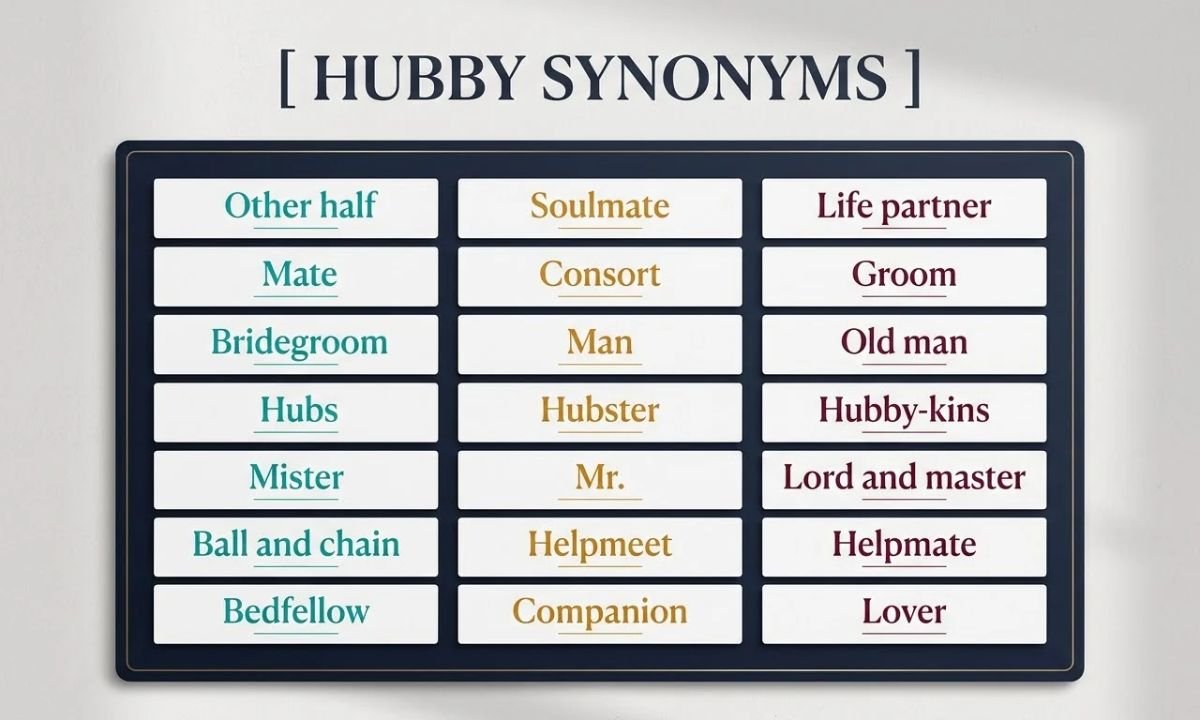
The word you pick for the man in your life tells people how you see him. A greeting card, a wedding toast, and a text to a friend each call for a different tone. Hubby synonyms give you that range, from warm to formal to playful.
Choosing well keeps your message clear and spares you an awkward mismatch. This guide sorts the options by tone and shows you how each one sounds in a real sentence. Use it to find another word for hubby that fits the moment.
What Does Hubby Mean?
Hubby is an informal noun for a married man, usually spoken about by his spouse. It carries warmth and a little humor. You will hear it in casual talk, social posts, and light writing, but rarely in legal or formal documents. When you want husband synonyms that suit a wider range of settings, you have plenty of choices.
Informal Tone and Everyday Usage
Most people use hubby in relaxed, friendly speech. It signals affection without sounding stiff. It also works as shorthand when the speaker wants to keep things light. The trade-off is that it can read as cute or dated in serious writing, so match it to your audience.
Quick Origin and Word Roots
Hubby is a pet form of hub, which is itself a clipped version of husband. Adding a -y ending is a common way English softens a word and makes it friendlier. The root word husband is older and more neutral, which is why it works in nearly every setting.
Another Word for Hubby: How the Options Group
Synonyms for hubby fall into four groups. Neutral terms like husband and spouse state the relationship plainly. Affectionate terms like soulmate and sweetheart add feeling. Casual and regional terms like mate and bidie-in suit chatty speech. Formal and role-based terms like consort and groom belong to ceremony, history, or specific life stages.
Informal Words for Husband vs. Formal Ones
Informal words for husband work best when the listener knows you well. Formal words work best when precision matters, such as on a form, in an announcement, or in a speech. A good rule: the more public or official the setting, the more neutral the word should be.
Words for a Married Man: Quick Reference
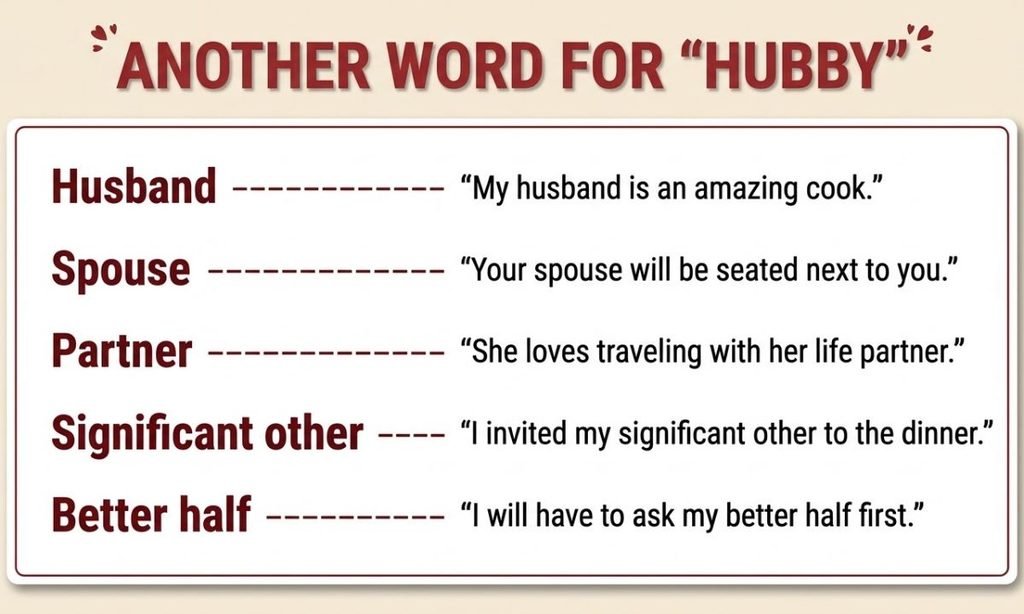
For a neutral choice, use husband, spouse, or partner. For warmth, use better half, soulmate, or sweetheart. For casual talk, use mate, hubs, or old man. For ceremony or formal writing, use groom, bridegroom, or consort. For a specific life situation, use househusband, widower, or common-law husband.
Husband
Context & Usage: Husband is the standard word for a man who is married. It fits every setting, from legal paperwork to a casual chat. It is clear, warm enough, and never confusing.
Examples:
- My husband cooks dinner on weekdays.
- She introduced her husband to the new neighbors.
Spouse
Context & Usage: Spouse is a gender-neutral word for a married partner. It suits forms, workplace policies, and any situation where you do not want to assume anything. It sounds formal, so it can feel distant in personal talk.
Examples:
- Please list your spouse as the emergency contact.
- Employees and their spouses are welcome at the dinner.
Male Spouse
Context & Usage: Male spouse names the gender of the married partner without using husband. It appears in policy language, news writing, and formal descriptions. It is precise but stiff, so skip it in warm conversation.
Examples:
- The plan covers a male spouse and any dependent children.
- Her male spouse works as a civil engineer.
Partner
Context & Usage: Partner describes a person in a committed relationship, married or not. It works well when you want an inclusive, respectful term. It also suits professional settings where details about the relationship are not needed.
Examples:
- My partner and I bought a house last spring.
- He brought his partner to the company picnic.
Life Partner
Context & Usage: Life partner stresses long-term commitment rather than a legal status. It fits couples who are married, engaged, or together without a wedding. It carries weight and sincerity, so it suits speeches and personal bios.
Examples:
- She thanked her life partner for years of steady support.
- They met in college and became life partners soon after.
Significant Other
Context & Usage: Significant other is a broad term for a romantic partner of any kind. It is useful in invitations and event planning when you do not know the details. It sounds a little clinical, so it is better for general use than for love notes.
Examples:
- Staff may bring a significant other to the holiday party.
- He asked his significant other to review the speech.
Better Half
Context & Usage: Better half is a playful, affectionate phrase for a spouse. It suggests the speaker sees the partner as the stronger or wiser of the pair. It works in friendly banter, toasts, and cards.
Examples:
- My better half remembered the reservation, as always.
- She laughed and called him her better half.
Give this your time: Synonyms for Advocate: 35 Better Words by Context
Other Half
Context & Usage: Other half describes a spouse as the part that completes you. It is warm and a little romantic, with an easy, spoken feel. It suits casual talk and light writing more than formal documents.
Examples:
- I will check with my other half before I say yes.
- Her other half drove six hours to surprise her.
Soulmate
Context & Usage: Soulmate points to a deep emotional bond, not just a legal tie. Use it when you want to show real depth of feeling. It is a strong word, so save it for sincere moments like anniversaries and vows.
Examples:
- He is my husband and my soulmate.
- After twenty years, she still calls him her soulmate.
Companion
Context & Usage: Companion emphasizes friendship, shared time, and steady presence. It suits older couples or gentle, understated descriptions of a marriage. It can sound formal or old-fashioned, which gives it a quiet dignity.
Examples:
- He was her companion on every long walk.
- They traveled as lifelong companions.
Mate
Context & Usage: Mate is a casual term for a partner, common in British, Australian, and New Zealand speech. It also has a wider sense of friend, so context matters. It feels relaxed and unfussy, and it works best in conversation.
Examples:
- Her mate fixed the fence on Saturday.
- He is my husband, my mate, and my best friend.
Mister
Context & Usage: Mister is a playful, informal way to refer to a husband, often used in friendly talk. It can sound affectionate or slightly teasing, depending on tone. It works in spoken language and casual writing, but not in formal settings.
Examples:
- I will ask the mister if he wants dessert.
- The mister is out back working on the grill.
Old Man
Context & Usage: Old man is a colloquial term for a husband, and sometimes for a father. It is rough, familiar, and a bit dated. Use it with care, because it only suits close company and a joking tone, and some listeners may find it disrespectful.
Examples:
- My old man still insists on driving everywhere.
- She told her friends the old man was cooking tonight.
Main Squeeze
Context & Usage: Main squeeze is slang for a primary romantic partner. It is flirty and playful, and it is most often used for dating rather than marriage. Use it for a light, humorous effect among friends.
Examples:
- He took his main squeeze to dinner for their anniversary.
- She showed up with her main squeeze at the party.
Squeeze
Context & Usage: Squeeze is a shortened slang version of main squeeze. It is casual and a little cheeky, with a retro feel. It fits jokes and informal chat but not formal introductions.
Examples:
- Bring your squeeze along to the barbecue.
- He called his squeeze to say he would be late.
Bidie-In
Context & Usage: Bidie-in is a Scots term for a live-in partner, often one who is not married. It adds regional flavor and a friendly, homely tone. Use it when you know your audience will recognize it, or when you want to add local color.
Examples:
- Her bidie-in has lived with her for ten years.
- He introduced his bidie-in to the whole family.
Hubs
Context & Usage: Hubs is a short, casual form of hubby, popular on social media. It sounds quick and affectionate. It suits posts, captions, and texts, but not formal writing.
Examples:
- Hubs made pancakes this morning.
- I am heading out with hubs for the weekend.
Beloved
Context & Usage: Beloved is a tender, formal word for someone deeply loved. It suits vows, cards, and heartfelt tributes. It adds emotional weight, so it can feel too grand for everyday talk.
Examples:
- She wrote a letter to her beloved on their anniversary.
- He read a poem for his beloved at the ceremony.
Sweetheart
Context & Usage: Sweetheart is a warm term of endearment, often used when speaking directly to a partner. It reads as gentle and loving. It also works as a way to describe a partner in sentimental writing.
Examples:
- Thanks for the coffee, sweetheart.
- He is still her high school sweetheart.
Read it slowly: Synonyms for Intense: 35 Sharper Words for Extreme Force
Honey
Context & Usage: Honey is a common pet name that spouses use when speaking to each other. It is soft, familiar, and a little old-fashioned. Use it in direct address rather than as a formal label.
Examples:
- Honey, have you seen my keys?
- She smiled and said, “Thanks, honey.”
Man of the House
Context & Usage: Man of the house describes the adult male head of a household. It can sound traditional, affectionate, or teasing, depending on how it is said. Some listeners may find it dated, so consider your audience.
Examples:
- The man of the house handles the barbecue.
- She asked the man of the house to check the furnace.
Lord and Master
Context & Usage: Lord and master is a jokey, old-fashioned phrase for a husband. It works only as a tongue-in-cheek remark among people who share the joke. Avoid it in serious writing, since taken literally it suggests control.
Examples:
- My lord and master has declared it pizza night.
- She teased her lord and master about the messy garage.
Consort
Context & Usage: Consort is a formal word for the spouse of a ruler, and it can describe a partner in a ceremonial sense. It is mostly found in historical, royal, and literary writing. In everyday speech it sounds stiff, so use it with a wink or in the right setting.
Examples:
- The queen appeared with her consort at the ceremony.
- In the novel, the prince consort stayed out of politics.
Groom
Context & Usage: Groom names a man who is about to marry or has just married. It belongs to wedding settings, not to long-term marriages. It is the right word for invitations, programs, and wedding stories.
Examples:
- The groom waited at the end of the aisle.
- Friends gathered to toast the groom.
Bridegroom
Context & Usage: Bridegroom is the formal, traditional form of groom. It appears in wedding ceremonies, religious texts, and formal announcements. It sounds elevated, so it suits formal occasions better than casual talk.
Examples:
- The bridegroom took the bride’s hand.
- The newspaper listed the bridegroom’s family by name.
Househusband
Context & Usage: Househusband describes a married man who manages the home and family full time. It names a specific role, not just a relationship. Some people prefer the phrase stay-at-home dad or homemaker, so listen to how the person describes himself.
Examples:
- He became a househusband after the baby arrived.
- Her husband is a happy househusband and a great cook.
Family Man
Context & Usage: Family man describes a husband who puts his home and children first. It is a compliment about character, not just a label. It suits profiles, tributes, and friendly descriptions.
Examples:
- Everyone on the team knows he is a devoted family man.
- Her husband is a family man who never misses a school play.
Benedict
Context & Usage: Benedict, also spelled benedick, means a newly married man who was long a confirmed bachelor. The word comes from a character in a Shakespeare comedy. It is literary and rare, so it works best in playful, well-read writing.
Examples:
- The old bachelor turned benedict at fifty.
- Our friends teased the new benedict about his sudden change.
Monogamist
Context & Usage: Monogamist describes a person who has one partner at a time. It is a neutral, somewhat formal term used in discussion and analysis. It rarely appears in affectionate talk, so use it for description, not warmth.
Examples:
- He describes himself as a lifelong monogamist.
- The study compared monogamists and those in open relationships.
Monogynist
Context & Usage: Monogynist is a rare term for a man who has only one wife. It is formal and mostly seen in academic or very wordy writing. Most readers will not know it, so explain it if you use it.
Examples:
- The author called him a faithful monogynist.
- In the essay, the monogynist was contrasted with the polygamist.
Common-Law Husband
Context & Usage: Common-law husband describes a man who lives as a spouse without a formal wedding, where the law or custom recognizes the relationship. The legal meaning varies by place, so use it with care. It fits legal, financial, and official conversations more than casual ones.
Examples:
- She listed her common-law husband on the insurance form.
- After seven years together, he is her common-law husband.
Widower
Context & Usage: Widower names a man whose wife has died and who has not remarried. It is a precise and serious word. Use it with sensitivity, and only when that status is relevant.
Examples:
- He has been a widower for three years.
- The widower kept his wife’s garden growing.
Hubby Antonyms and Related Terms
The direct antonyms for hubby are wife and bride, the female counterparts in a marriage. Related word forms include hubbies, husband, and husbandry, though husbandry means farm management and has no connection to marriage. Be careful with terms like boyfriend, beau, and paramour. They describe unmarried or romantic ties and do not mean the same thing as hubby.
How to Choose the Right Word
Start with your audience, then check the setting. Use husband or spouse for forms and formal writing. Use partner or significant other when you want to be inclusive. Use better half, soulmate, or sweetheart for warmth in cards and speeches. Use hubs, mate, or mister for casual talk. Before you commit to a word, read the sentence aloud and ask whether he would be comfortable hearing it.
Frequently Asked Questions
What is another word for hubby?
Husband is the most common alternative, and spouse or partner work when you want a more neutral tone.
What is the difference between husband, spouse, and partner?
Husband names a married man, spouse is gender-neutral for any married partner, and partner covers any committed relationship, married or not.
Is hubby formal or informal?
Hubby is informal and best kept for friendly, relaxed speech and writing.
What are the best informal words for husband?
Hubs, mate, mister, and better half are popular informal choices, each with a slightly different tone.
Can I use hubby in professional writing?
Avoid it in formal or professional writing and choose husband or spouse instead.
Conclusion
Knowing the full range of words for a married man lets you match your language to the moment, whether you are writing a vow, filling out a form, or chatting with a friend. Each alternative carries its own tone, so a quick check of audience and setting prevents mix-ups and keeps your message clear. With these hubby synonyms in hand, you can speak and write about your husband with accuracy, warmth, and confidence.

Hi, my name is Kalvin. I love to read and learn new words every day. On this site, I share easy synonyms and simple grammar tips. Let us learn and write better together!


One thought on “Hubby Synonyms: 32 Better Words for Your Husband”