
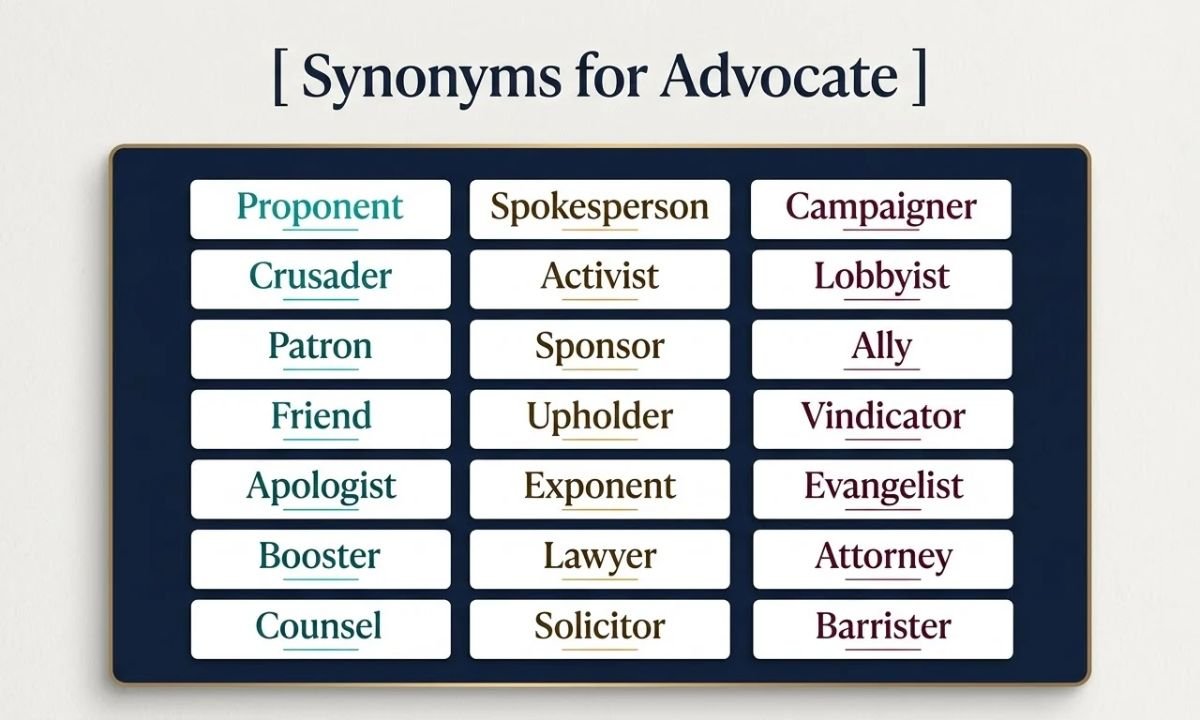
The word advocate is useful, but it is also easy to overuse. It can mean a lawyer, a campaigner, a loyal fan, or someone who simply speaks up. That range is exactly why precise vocabulary matters. The right word tells your reader who is acting, how hard they push, and what is at stake. The wrong word blurs the message or sounds off for the setting. This guide gives you 35 synonyms for advocate, with clear usage notes and examples you can borrow.
Quick Answer: Top Synonyms for Advocate
If you need another word for advocate right now, start with these. For a person who supports a cause, use champion, supporter, proponent, or ally. For a legal professional, use counsel, attorney, barrister, or lawyer. For the verb, use support, back, promote, endorse, or argue for. Pick the word that matches how strongly the person acts and in what setting.
Synonyms for Advocate as a Noun
As a noun, advocate has two main meanings. The first is a person who publicly supports a cause, policy, or person. The second is a legal practitioner who represents a client. Most weak word choices come from mixing these two up, so decide which one you mean before you reach for a synonym.
Synonyms for Advocate as a Verb
As a verb, to advocate means to recommend, promote, or argue in favor of something. Notice the pronunciation shift: the noun ends in a soft “-kit” sound, while the verb ends in a clear “-kate.” Verb synonyms range from mild (recommend, urge) to active (campaign for, lobby for), so match the energy to the situation.
How to Choose the Right Synonym by Context
In formal writing and business, proponent, sponsor, and endorse sound measured and credible. In legal, policy, and civic settings, precision matters most, so use counsel, attorney, barrister, or lobby for only when they are accurate. In casual speech, backer, ally, and stand up for sound natural and warm. When in doubt, ask who the audience is and how much formality they expect.
Subtle Nuances: Advocate vs. Champion, Back and Uphold
These words are close, but they are not twins. Champion suggests defending someone who is under attack or cannot speak for themselves. Back suggests practical support, often when someone needs it. Uphold suggests steady support for a principle or decision, especially under pressure. Advocate sits in the middle: it implies active, public support without any of those extra shades.
Prepositions, Collocations and Synonyms for Advocacy
The preposition often changes with the word. You advocate for a cause (or simply advocate a policy), champion a cause, are a proponent of a plan, and lobby for a bill. You also stand up for a person, speak up for a group, and rally behind a leader. For the noun advocacy, a strong synonym for advocacy is support, promotion, campaigning, or championing, depending on how active the effort is. Getting the preposition right makes a sentence sound native.
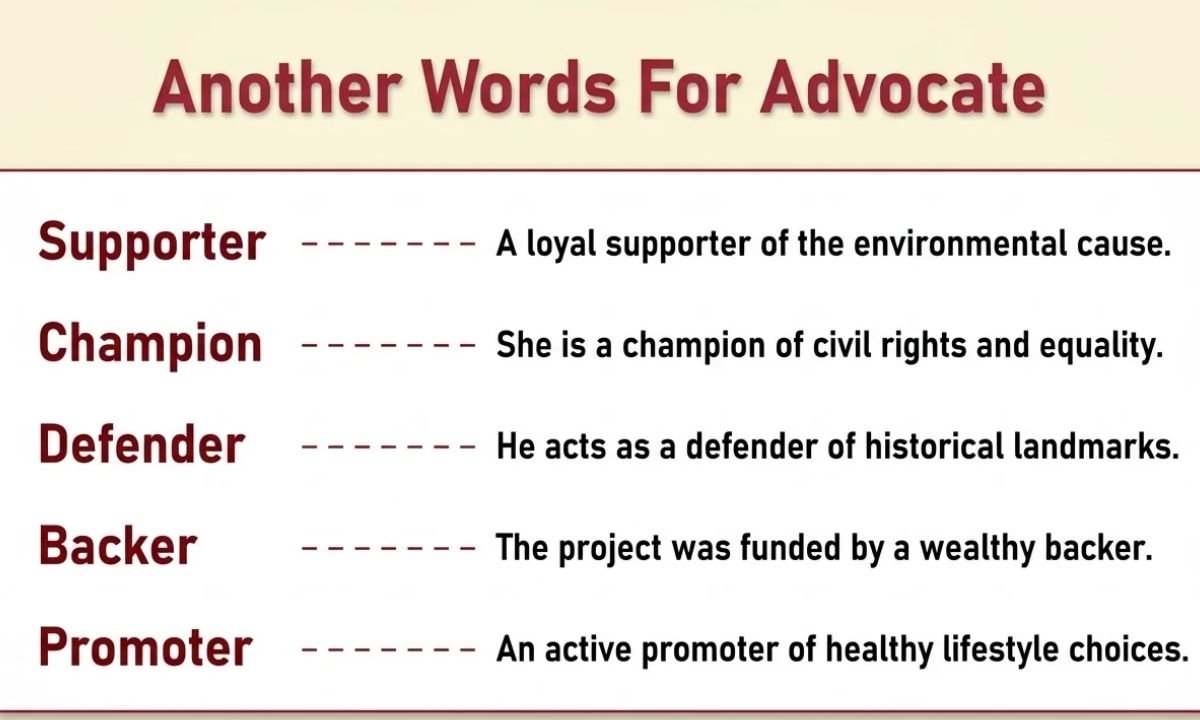
1. Champion
Context & Usage: Champion means someone who fights for a person or cause, often one that is under threat or overlooked. It fits speeches, profiles, and workplace praise where you want to show loyalty and courage. It carries more emotion than advocate and tells the reader the support is personal.
- She became a champion of affordable housing in her city.
- Every team needs a champion who will speak up for new ideas.
2. Supporter
Context & Usage: Supporter is the plain, friendly choice for someone who backs a person, group, or idea. It works in nearly any setting, from fundraising emails to team updates. Its main benefit is clarity, since nobody will misread it.
- Our supporters helped the library stay open through the winter.
- He has been a steady supporter of the school since it opened.
3. Proponent
Context & Usage: Proponent describes someone who argues for a plan, theory, or policy. It sounds formal and analytical, so it suits essays, reports, and debates. It signals that the person has reasons, not just feelings.
- She is a leading proponent of the four-day work week.
- Proponents of the bill say it will lower costs for families.
4. Backer
Context & Usage: Backer means someone who supports a project, often with money, influence, or a public stamp of approval. It works well in business, politics, and creative projects. It tells the reader the support has real weight behind it.
- The startup’s biggest backer is a former customer.
- He is a longtime backer of local music festivals.
5. Defender
Context & Usage: Defender points to someone who protects a person, right, or idea from criticism or harm. It fits debates, news writing, and moral arguments. It adds a sense of resistance, so use it when something is being challenged.
- She is a fierce defender of press freedom.
- The mayor remains a defender of the current zoning plan.
6. Promoter
Context & Usage: Promoter describes someone who actively spreads the word about an idea, product, or event. It is practical and common in business, sports, and the arts. Be careful in serious civic writing, because it can sound commercial.
- He is an enthusiastic promoter of cycling to work.
- The promoter of the festival spent months building local support.
7. Campaigner
Context & Usage: Campaigner means a person who works in an organized, ongoing effort to bring about change. It suits social causes, politics, and public health. It shows sustained action rather than a single statement.
- She is a lifelong campaigner for cleaner rivers.
- Campaigners gathered more than ten thousand signatures in a week.
8. Activist
Context & Usage: Activist describes someone who takes direct action for social or political change, such as organizing, protesting, or petitioning. It is widely understood but can carry strong associations depending on the audience. Use it when the person truly acts, not just speaks.
- The activist led a community drive for safer crosswalks.
- Young activists are shaping the debate on climate policy.
9. Spokesperson
Context & Usage: Spokesperson means someone who speaks on behalf of a group, brand, or cause. It fits media, corporate, and organizational writing. It is a neutral and accurate replacement when the advocate’s main job is to represent others publicly.
- The spokesperson for the tenants’ union addressed the council.
- She served as the patients’ spokesperson during the hearing.
Add this to yours:Synonyms for Intense: 35 Sharper Words for Extreme Force
10. Representative
Context & Usage: Representative names someone who acts or speaks for others in an official or formal role. It works in civic, business, and workplace settings. It is more neutral than advocate, so it avoids implying a strong personal stance.
- A union representative joined the meeting to raise the staff’s concerns.
- The firm sent a representative to speak for its clients.
11. Counsel
Context & Usage: Counsel is a formal legal synonym for advocate, meaning a lawyer who advises and speaks for a client, especially in court. It is common in contracts, court reports, and legal writing. It sounds precise and professional, which builds trust.
- Defense counsel asked the court for more time.
- She retained counsel before signing the agreement.
12. Attorney
Context & Usage: Attorney is the standard term in the United States for a licensed lawyer who represents clients. It fits everyday conversation as well as formal writing. Use it when you want a clear, widely understood legal term.
- Her attorney reviewed the contract before she signed it.
- The attorney argued that the evidence was unreliable.
13. Barrister
Context & Usage: Barrister is a lawyer in England, Wales, and some other common law systems who argues cases in higher courts. It is a legal synonym for advocate in the strict courtroom sense. Use it only for places where the role exists, since it is not interchangeable with attorney.
- The barrister presented the case to the High Court.
- A solicitor hired a barrister to argue the appeal.
14. Solicitor
Context & Usage: Solicitor is a lawyer in the UK and several other countries who advises clients and prepares cases, usually without arguing in higher courts. It is a close cousin of advocate but not a perfect match. Use it for legal advice and paperwork rather than courtroom argument.
- Her solicitor drafted the lease and explained each clause.
- He called his solicitor before replying to the letter.
15. Lawyer
Context & Usage: Lawyer is the broadest and most natural term for a legal professional. It suits casual talk, news stories, and general writing where regional distinctions do not matter. It is simple, clear, and friendly.
- My lawyer says we should wait for the final offer.
- She became a lawyer to help families facing eviction.
16. Pleader
Context & Usage: Pleader is an older, formal term for someone who argues a case or makes an appeal. It appears in historical, literary, and some legal writing. Use it sparingly, since most readers will find it dated.
- He was a skilled pleader before the court.
- The pleader begged the judge for mercy on his client’s behalf.
17. Sponsor
Context & Usage: Sponsor means someone who puts their name, money, or influence behind a person, bill, or project. It works well in business and politics. In a workplace, an executive sponsor is an advocate with real authority.
- The senator was the main sponsor of the bill.
- She found an executive sponsor to back her proposal.
18. Patron
Context & Usage: Patron describes someone who gives steady financial or social support to an artist, charity, or cause. It sounds respectful and a little traditional. It suits arts, nonprofit, and cultural writing.
- The museum’s patron funded a new gallery.
- She became a patron of young local writers.
19. Ally
Context & Usage: Ally means a person who stands with a group or cause, especially one they are not directly part of. It is warm, modern, and widely understood. It shows solidarity and works best when the person’s actions match the label.
- He has been a strong ally to his coworkers during the reorganization.
- Allies from other departments helped push the change through.
20. Endorse
Context & Usage: Endorse means to publicly give approval or support to a person, product, or plan. It fits business, politics, and media writing. It carries a sense of formal backing, so it adds credibility.
- The union voted to endorse the new contract.
- Several doctors endorse the new guidelines.
21. Uphold
Context & Usage: Uphold means to keep supporting a principle, rule, or decision, especially when it is challenged. It suits legal, ethical, and civic writing. It signals steadiness and conviction rather than excitement.
- The court voted to uphold the earlier ruling.
- She promised to uphold the values of the organization.
22. Espouse
Context & Usage: Espouse means to adopt and openly support a belief, cause, or theory. It is formal and fits essays, reviews, and analysis. It suggests the support comes from deep personal conviction.
- He espouses a simple approach to personal finance.
- The author espouses the idea that small habits shape big results.
Do not miss this: During Synonym: 30 Other Words for During
23. Urge
Context & Usage: Urge means to strongly encourage someone to take an action. It is more direct than recommend and more personal than advocate. Use it when you want to show real concern or a sense of timing.
- Health officials urge residents to get vaccinated before winter.
- I urge you to read the full report before voting.
24. Recommend
Context & Usage: Recommend means to suggest something as a good choice. It is gentle, polite, and suitable for emails, reviews, and professional advice. It lacks the intensity of advocate, which can be a plus when you want to sound helpful, not forceful.
- I recommend moving the launch to next month.
- The committee recommends a phased approach.
25. Back
Context & Usage: Back is a short, casual verb meaning to support someone or something, often when it needs help. It sounds natural in conversation and informal writing. It suggests loyalty and practical help rather than formal approval.
- Most of the board backs the new director’s plan.
- I’ll back you when you pitch this on Monday.
26. Support
Context & Usage: Support is the safest all-purpose verb for backing a person, cause, or plan. It works in any setting, from legal documents to friendly notes. It is clear and warm, though it does not show how actively someone is working.
- We support the proposal and hope the council approves it.
- She supports her team by clearing roadblocks.
27. Promote
Context & Usage: Promote means to actively encourage or publicize an idea, product, or practice. It fits marketing, health, and education writing. It shows effort and visibility, not just agreement.
- The program promotes healthy eating in local schools.
- He promotes open communication across all teams.
28. Plead For
Context & Usage: Plead for means to ask earnestly, often with emotion, on behalf of someone or something. It is dramatic, so it suits speeches, stories, and appeals. It shows urgency and need, but can sound heavy in routine business writing.
- The charity pleaded for more funding after the storm.
- She pleaded for patience while the team fixed the problem.
29. Push For
Context & Usage: Push for is a plain, energetic phrase meaning to press hard for a change or result. It sounds natural in news and workplace talk. It shows determination without sounding stiff.
- Parents are pushing for a safer drop-off zone at the school.
- Our team pushed for a longer testing period.
30. Argue For
Context & Usage: Argue for means to present reasons in favor of a view or plan. It fits essays, meetings, and debates. It highlights logic and evidence, which makes your support sound thoughtful.
- The report argues for a gradual rollout.
- She argued for a lower price based on the survey results.
31. Lobby For
Context & Usage: Lobby for means to try to influence decision-makers, usually in government, to support a policy. It is precise in civic and policy writing. Use it only when real influence work is happening, because the word can carry a negative edge.
- Local farmers lobbied for stronger water protections.
- The association lobbies for fair pay in the industry.
32. Stand Up For
Context & Usage: Stand up for means to defend someone or something, often at some personal risk. It is warm, human, and common in everyday speech. It shows courage and loyalty in just a few words.
- He stood up for his coworker during the meeting.
- Good leaders stand up for their people.
33. Speak Up For
Context & Usage: Speak up for means to say something on behalf of a person or group who may not be heard otherwise. It is casual and sincere, and it works in speeches and personal writing. It highlights voice and courage rather than formal authority.
- She spoke up for the students who were left out of the plan.
- Someone has to speak up for the quiet members of the team.
34. Rally Behind
Context & Usage: Rally behind means to gather and show united support for a person, cause, or leader. It carries energy and a sense of group effort. Use it for community, political, or team settings where many people are acting together.
- The town rallied behind the family after the fire.
- Employees rallied behind the new safety policy.
35. Campaign For
Context & Usage: Campaign for means to work in an organized, sustained way toward a goal. It fits politics, public health, and social causes. It shows planning and persistence, not just opinion.
- Residents are campaigning for a new bus route.
- She has campaigned for better mental health care for years.
Antonyms for Advocate: Opposites and Contrasts
Advocate synonyms and antonyms are best learned together, because opposites sharpen meaning. As a noun, the opposite of advocate is opponent, adversary, antagonist, or critic. As a verb, common opposites are oppose, resist, discourage, thwart, and condemn. Use opponent for a general rival, critic for someone who judges, and adversary for a more serious, direct conflict.
Common Mistakes and Overused Word Swaps to Avoid
Do not treat every legal term as a synonym. Barrister, solicitor, and attorney belong to different legal systems, so choose the one that fits the place you are writing about. Avoid slang or insulting labels, such as ambulance chaser or mouthpiece, in neutral writing, because they change the tone completely. Do not swap in a stronger word than the facts support: calling someone a champion when they only voted in favor overstates the case. Finally, skip long lists of loosely related words, and choose the one that fits the sentence.
Frequently Asked Questions
What is another word for advocate?
The most common choices are supporter, champion, proponent, and backer, depending on how active the support is.
What is a legal synonym for advocate?
Counsel, attorney, barrister, and lawyer are the main legal synonyms, and the right one depends on the country and the court role.
What is the difference between advocate and champion?
Advocate means active public support, while champion adds the idea of defending someone who is under attack or unheard.
Which preposition goes with advocate?
Use advocate for a cause or advocate a policy directly, while synonyms like proponent take of and lobby takes for.
What are the opposites of advocate?
Common antonyms are opponent, adversary, and critic as nouns, and oppose, resist, and thwart as verbs.
Conclusion
Choosing the right synonym for advocate is a small skill with a large payoff, because each word tells your reader who is acting, how strongly, and in what setting. When you match champion, counsel, endorse, or lobby for to the real situation, your writing becomes sharper, more accurate, and easier to trust. Keep this list close, practice the prepositions that go with each word, and you will communicate with more confidence in every email, essay, and conversation.

Hi, my name is Kalvin. I love to read and learn new words every day. On this site, I share easy synonyms and simple grammar tips. Let us learn and write better together!


One thought on “Synonyms for Advocate: 35 Better Words by Context”